Monday, December 17, 2007

Simbang Gabi

Simbang Gabi
December 17, 2007
Introduction
I am interested to know who were here yesterday on the first day of our Novena Mass. Could you please put your hands up? Well done. Put your hands up if this is your first Dawn Mass. Good effort! Put your hands up if you think you will be here again tomorrow morning. Good luck. Put your hands up if you are still sleepy? Well, I am!

Story
Once in the Philippines there was a mother who’s been trying hard to wake up her son for Dawn Mass. As you may know Dawn Mass in most parishes in the Philippines begins as early as 3:45 am. “Come on son” says the mother, “get out of your bed today is the second Day of Novena Mass we cannot be late.” But her son wouldn’t respond and pretended to be sleeping still. The mother shouted up the stairs “Get up!,” and the son shouted back down the stairs: “No!” She shouted again: “Get up! Gising na!, and he shouted down again: “Can’t you see I’m still sleepy! Why should I get up?”

Mother said: “Well, first of all your early breakfast is ready, second we cannot afford to miss the Novena Mass, and thirdly you are the Parish Priest and for God sake you have to say Mass today! Come on people are waiting!”


Being human
Well, part of being human we have our own inadequacies and shortcomings. We have the tendency to lose motivation and sometimes we failed to be consistent in our duties. When we make mistake, a serious one or not, our classic excuse is “I am just human. I am not perfect.”

In the Gospel today on the second Day of this Dawn Mass, we heard the genealogy of Jesus, we heard many names from generation to generation and from which Jesus comes from. The names which I read from the Gospel of Matthew (with great difficulty of pronouncing correctly!), were real people, they were human like who were confronted of their own inadequacies, there were flawed, imperfect, at times unfaithful and sinful, (if they are here today they too would be sleepy at Dawn Mass).

Today’s Gospel invites us to meditate on two things: first Jesus is the new beginning of humanity and secondly, Jesus is the basis of the hope of humanity.

Jesus as the new beginning
The genealogy of Jesus show that his ancestors, great, great, great, great grandaparents, or kanunununuan are a mixture of good and bad people and most often the dominance of the latter. This is humanity to which Jesus, the Christ, the Messiah, the Saviour, is born into; this is the kind of people, God the Father is sending his very own Son to this world.

Each name mentioned in Jesus’ genealogy has its own story of human failure to tell. To mention a few we have Abraham and Isaac lie to disown their wives before authorities to save their own lives. Jacob is a trickster, stealing both the blessing (“berakah” in Hebrew) and birthright (“bekorah”) from his brother, Esau. We heard of David, supposedly greatest of Israel’s kings, is guilty of the murder of Uriah, the commander of his own army, to legitimize an adulterous affair. Then his son Solomon who is notorious for having 700 wives and 300 concubines, (how about that? He beat my grandfather who had four wives!) His leadership is not only religiously offensive; it is also marked by corruption and injustice.

There were long list of human failures among Jesus’ ancestors. The coming of Jesus is the coming the new beginning in humanity. Jesus is perfect model of being human – flawless and sinless.

Jesus' genealogy revealed that he came for the salvation of all people regardless of race, nationality or gender. His genealogy is not for history but to present us his identity, a new beginning of humanity.

Jesus is the basis of our hope and joy
Secondly we meditate today on the second day of Simbang Gabi or Dawn Mass, that Jesus is the basis of our hope. Jesus is a real person. He is not an invention of the imagination of his disciples. Like all of us, he had ancestors. But Jesus is not an ordinary person. Jesus is a descendant of David but as savior, He is human and divine.

We may have our own weaknesses, struggles and personal difficulties in life, human as we are. But the genealogy of Jesus reminds us that God can draws goodness out of human mistakes and incompetence through Jesus Christ. It gives us encouragement and assurance that if we have Jesus in our hearts God can make good things out of us.

Conclusion
As we come to prepare for Christmas, we must want Jesus and welcome Jesus in our day to day lives. Jesus is the only remedy from all our anxiety, fear and worry, and all our other human weaknesses.

Our being human is never perfect, it is not pure and its not, at the moment, a worthy offering to God. Let us allow then Jesus to be born in us to make us, in the end, a worthy offering to God, our Father.

In this second day of the Novena, let us prepare ourselves so that we too might become like Jesus, a deserving people of God. Amen.

Friday, December 14, 2007

Rejoice for Christmas

Third Sunday of Advent A
December 14, 2007
Isaiah 35:1-6a, 10
Psalm: 146:6-7, 8-9, 9-10
James 5:7-10
Matthew 11:2-11

Rejoice!
On the Third Sunday of Advent, Gaudete Sunday, we all centered on joy, it is a time when we try to overcome our personal depressions, unnecessary worries, anxieties and whatever negative things we have in our mind.

This joyful spirit of this week is marked by the third candle of our Advent wreath, which is rose colored. Rose is a liturgical colour of happiness and joy. I should be wearing rose vestment today but I still don’t have one. Maybe next year I will just bleach my purple vestment with White King! (jk :)

The first reading from the book of the prophet Isaiah sets us to this joyful mode of the week. Isaiah writes, “They will bloom with abundant flowers, and rejoice with joyful song.” He continues, “Those whom the Lord has ransomed will return and enter Zion singing, crowned with everlasting joy.”

During this week as we approach Christmas we are being reminded that our preparation and waiting for Christ’s birth must bring us the feeling of joy.

Christmas season is a time of joy. We must be joyful as Christmas gets nearer.

Unfortunately as our modern society race to consumerism and search for material goods during this time of the year instead of being joyful many people feel the exact opposite. Many people are tired and weary because of overspending in shopping centers and bargain hunting. According to statistics depression and suicide rates are high during Christmas season mainly because of our high expectation, greed and selfishness.

Human situation – happiness, sadness
But when we set our hearts focused to true meaning of Christmas, that is the incarnation of God, we move through this week rejoicing because our longing and waiting has prepared us to believe that the reign of God is close at hand.

This is the reason why during this week of Advent the liturgy invites to be happy and go rejoicing. Of course, we can get pleasure out of the Christmas shopping, the lights, receiving Christmas cards from people we haven't heard from since last year. But where can we find real deep, serene joy in the midst of a world in turmoil?

God wants us to be happy and joyful at all times. It is God’s will that we, his children to be happy, to have a big smile on our face, to have joyful hearts, he wants us to be cheerful, to enjoy life and live life to its fullness. Even though we all want to rejoice, the bare fact is that we rarely do, maybe because of various circumstances, problems and disappointments in our lives.

Depression is one of the greatest problems in our society today. The enemies of joy or what stop the person to be happy are fear, worry and anxiety. We don’t deny the hardship and suffering in our day to day life.

John the Baptist
The Gospel today in fact also bears that image of human suffering as John the Baptist was put to jail. He was put into prison and later he was beheaded.

Although he suffered a lot, the Gospel gives us a glimpse that he was a indeed a happy man. He is someone who is not conquered by fear, anxiety and worries in life. Deep within he is rejoicing, for only one reason, only because of Jesus.

We may have our own suffering and problem in our life today but there is always reason to reason to rejoice, we have Jesus to give us comfort and healing. The Gospel reading today gives us the reason to rejoice at the coming of the Messiah – “The blind see, the lame walk, the lepers are cleansed, the deaf hear, the dead are raised to life and good news is proclaimed to the poor.”

The key to rejoice even we are burden with all problem and suffering is found in the second reading today St. James' advises us to be patient and makes our hearts firm because the Lord is at hand.

As we pray today, we also rejoice that the Lord does not fail to show his power and might. Let us open our hearts and let God transform our lives. Let us be encouraged by today’s readings. They remind us that our lives can also be transformed if we are joyful, patient and place our trust in God.

We heard how Jesus healed the sick, forgave sinners, raised the dead. He wants to do the same with us in this Mass. He wants to help us. He wants us to be happy. He is only remedy from all our anxiety, fear and worry. Money, material possessions, popularity and beauty can never determine our happiness.

He is with us in this Eucharist. But we must want him and welcome him in our lives. With prayer in our hearts and with sincere willingness, let allow Jesus to grant us the grace we need.

Christ is our hope and joy. Let us rejoice! Amen.

Lord, help us to be joyful, prepared and ready for your coming. Amen
.
source Fr Tony's homily

Sunday, December 09, 2007

Waiting for Christmas

Second Sunday of Advent Year A
December 9, 2007
“Prepare the Way”
Isaiah 11:1-10
Psalm 72:1-2, 7-8, 12-13, 17
Romans 15:4-9
Matthew 3:1-12


We are now in the second week of Advent season. It’s been two weeks now since we have entered the liturgical season of advent and since then we've been paying special attention to the mystery of waiting. As we reflected last week, we said, waiting is part of daily life; waiting can excite us but it can be boring, waiting can test our patience and sometimes it can irritate us. But during this time of Advent waiting for Christmas is a wonderful opportunity for spiritual renewal of our lives.

Today the words of John the Baptist echoes in all churches around the globe “Repent for the kingdom of heaven is at hand!” This is a powerful message given to million of Christians around the world and to each one of us here present this Sunday to help us and instruct us how to wait and prepare spiritually at Christ’s coming.

I’m we are all familiar with this message of repentance, we hear again and again, but sometimes we take this call for granted, we don’t act about it or most probably we don’t get the exactly message.

Story “Memento mori”
Once there is a radio program that made an interesting gimmick or publicity stunt. This radio program made a series of anonymous phone calls to people with this frightening message: “Remember you must die, remember you must die.” They scare people about their own mortality.

The first to receive a call is a very rich, very self-centered old woman. When her call comes, she’d never even considered that her perfect little self-contained world might come to an end. She’s utterly shocked, her arrogant social life crumbles, fear eats her up, and she dies.

The next in line or the second victim is an elderly gentleman. After receiving his call, he begins to panic how he would enjoy his remaining life. He divorces his third wife, marries a young woman and goes on a cruise with her around the world. Unfortunately, it's more than his heart can take and he dies of a cardiac arrest.

Many other people received the same anonymous call and they reacted thoughtlessly, they cursed the caller, they hanged the phone, etc.

Finally the last old woman is called. When this lady was told on the phone “remember you must die” she thought for a while and said, "I'm so glad you called sir, you know, at my age one forgets so many things. It is good of you to remind me of this most important fact." And with that she sets about rebuilding her life, healing old wounds, ask forgiveness from her loved ones and friends, went to church regularly, appreciate the beauty of life and putting aside all that doesn't really matter. She got the message!


Repentance
Every second week of Advent, God is giving us this same kind of wake-up call through John through Baptist: Repent and renew your life and prepare for the rebirth of Jesus in your life.

John the Baptist is Christ’s herald, the one who prepares the way of his coming with a radical message of repentance. This message is not at all soothing. John’s pronouncement doesn’t sound very friendly at all. We all heard it; if we indeed take it seriously into our hearts we find it very confronting and very uncomfortable. See how he confronted the Pharisees and Sadducees John addressed them “brood of vipers.”

Brood of vipers. It’s a very strong image but I don’t exactly know what it meant until I “googled” it from the internet: “According to a widespread tradition in the ancient Mediterranean world (attested in Herodotus, Aelian, Pliny and other writers), vipers killed their mother during their birth, hence were associated with parent-murder. Ancient writers sometimes used parent-murder as an example of one of the worst conceivable crimes, one that invited divine vengeance. Matthew’s gospel applies this image to the Pharisees as they claimed to be the true heirs of the patriarch and prophets but they refused to believe in the coming Messiah. He probably used this image to challenged them to be humble, to reform their lives, to repent and believe that the promised Messiah is about to come.

Metanioa
"Repent, for the kingdom of heaven has come near" are words which Jesus will later use to begin his preaching (4:17) and similar to what the disciples were to proclaim (10:7), and the same message we hear in the Church again and again.

Do we really get the message?

Literally the Greek word for repentance (metanoia) means, "a change of mind." It’s a radical revision and transformation of our whole mental process. That change of mind is something whereby God takes center place in our consciousness, in our awareness, and in our minds.

Metanoia is the idea of the need for conversion. And this is then recognizing that we don't know, truthfully don't know, God and truthfully don't feel ourselves as God intends us to. The second week of Advent wakens us up that we really need metanoia, to allow the grace of God to enter into our lives and teach us how to see ourselves and how to come to the true self.

True repentance metanoia involves a complete turn around -- facing in a new direction, a change of heart, a new commitment. It’s a daily experience that renews our baptism. “The repentant person pray to God saying, "I can't do it myself, God. Help to start afresh a reform life. I want to die from my old self so that you can raise me to a new life."

Repentance for us is not a one-time action, but must take place daily, because preparing for the Lord is a perpetual task.

Let us remember that the Holy Mass is the most powerful of prayers that can change our hearts and minds because it transforms us into a Eucharistic people, providing the living presence of Jesus. Repentance and conversion is only possible through Jesus whom we encounter in the Sacraments especially in the Eucharist and the Sacrament of Reconciliation. Regular confession makes us strong and enables us to receive more grace of God and to enliven our spiritual wellbeing.

Repentance not scary at all
"Repent, for the kingdom of heaven at hand.” These words of John the Baptist can be scary and confronting. But if we understand its real message to repent is another way of saying, “waken up and see the wonder and beauty all around you.” The main ways to repent is stop and begin to appreciate the goodness and beauty of in your life. The first place to look for this is in our home and among our family. To count our blessing each day. Secondly to look at the community of faith we all belong and acknowledge all the gifts and graces we receive there.

Let us be thankful and hopeful knowing that amidst the wilderness of troubles and suffering in our lives there is a voice within us, crying out that things will turn out right.


Prayer
We pray for Lord, that even in the midst of desolation
and sinfulness
we prepare a way for your coming
and made the paths straight
so that we would be there to welcome you.
We know for sure that we would experience your salvation.
So help us Lord to prepare your way inside ourself,
as we wait with joyful hope for your coming.

.
.
source Fr Tony's homily

Saturday, December 01, 2007

Welcome back

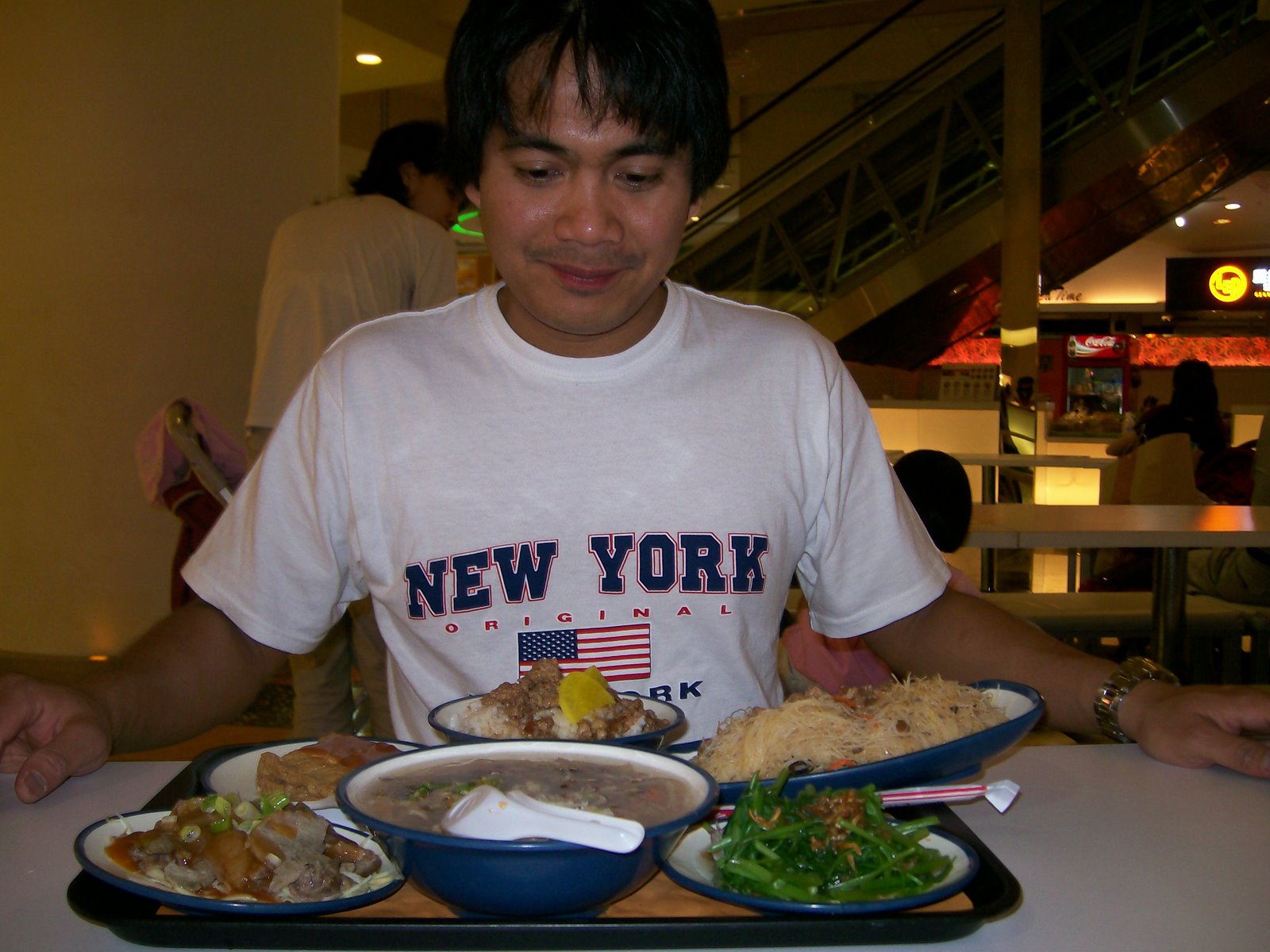
After almost three months of wandering I am now back again to blogging. Welcome back to me and 'hi' to you all who might have been reading this. Many great things happened during the last few months specially during my holidays in Taiwan, and ofcourse sa bansang Filipinas. Before I post my reflections, homilies and some thoughts allow me to present to you a variety of food that I have documented during holidays. Samahan ninyo ako na balikan ang mga pagkain na ngayon ay pawang mga ala-ala na lamang. 'Eto ang aking ulat.

A simple merienda in Taiwan

First breakfast in Taiwan

Taipei's best

Taiwanese seafood lunch

Old traditional Taiwanese meal with a tinge of Japanese cuisine


Pinoy delicacy in Novaliches

Malolos' best

Sister Maria's beautiful cooking

Guilbert's Place (has to go with SanMig Lite)


Sabang, Baliuag sumptous dinner


Deep fried Dinosaur fossil

Stick 'em at Paborito's in Malolos, Bulacan
.
.
.
.
O God you are so very good.
Thanks for the food.
Huwag sana kayong mapagod
Sa pagbigay sa amin ng food.
Amen.

Sunday, November 11, 2007

Limits of Biology

32nd Sunday in Ordinary Time
“Life has changed not ended”
2 Maccabees 7:1-2, 9-14
Psalm: 17:1, 5-6, 8, 15
2 Thessalonians 2:16-3:5
Luke 20:27-38

Biology
One of my favourite subjects when in highschool was Biology, the “science of life” or a “study of life.” Unlike Mathematics which is merely about numbers, formulas and computations, in Biology all you need to do is to observe how living things or organisms grow and develop. You just examine the structure of the species (plants, insects or animals) and observe how they interact with each other in their environment. Unlike all other subjects there was always a “wow moment” in Biology. You always discover something wonderful about life most especially those microscopic organisms.
Although science can be exciting as can be biology does not give us all the answer about life. Biology cannot give us answer to questions like, why you and I are born, what is our purpose in life, what is our mission in life, why do things happen, and most of all what is the meaning of life.

Life's purpose
The readings today are not about science of life but its about the Christian concept of life after death. It is this gift of life, both present and eternal, which comes to the theme of today’s readings. Death is the opposite of life; it entails the cold and rigid corpse, the decay, the stench. The image of death often scares us “to death” because death is always associated with pain, separation, end of our dreams.

For us Christian, although death brings us tears it always has a positive side. Death is a passage leading to something entirely wonderful. Death leads us to the door of heaven, to immortality, to eternal life with the God of life. All this is summed up in the word “resurrection.”

Our Christian belief in eternal life, in Resurrection, gives us answer that Biology cannot answer “why you and I were born, what is our purpose.” We are born because God loves us. Life is precious because life is God’s gift to us. Our purpose in life to live life to its fullness; thus we must celebrate every moment of our life.

St. Ireneaus says, “the glory of God as the human person fully alive.” When we are at best we give glory to God. We appreciate God’s given gift. The gift of life is God’s an expression of God’s love to us. Natural death will not stop us to receive that God’s gift of life. Even when we die on earth we will still enjoy “life” in heaven.

In the Gospel Jesus rebuts the Sadducees who were skeptical about the after life. They found no basis for a doctrine of resurrection in the "books of Moses," the only scriptures they recognized as authoritative. They asked him question about an old Jewish tale - a story about seven husbands who died in succession shortly after marrying the same bride. The Sadducees asked Jesus which one of them would be married to the widow in the afterlife. Rather than seeking information, they were trying to trap Jesus.

Jesus explains that, in heaven, we will all be "like angels." They can be no marriage afterlife because raising new children will be not needed because there is no death. Jesus is really telling them to let God the Father take care of heavenly problems.

Here on earth, our task is to recognise gift of life to everyone, to respect each other, to cherish each other, to give value to life.

Because we believe in the Resurrection our love to each other doesn’t stop even when our loved ones died. This why during the month of November we remember in a special way our departed loved ones and all faithful departed, the war veterans, those who died in natural calamity. We recognise and honour their good deeds, their sacrifices, their dignity, their sense of self-worth, their sense of humour even – because they cannot die. They are alive, very much alive not only in our beliefs but they are alive in our hearts and prayers.

I would like to end by reading a short incident told by William J. Bausch

“An unknown women in Ravensbruck concentration camp wrote this life prayer and pinned it to the dead body of a little girl there. “O Lord’, she wrote, ‘remember not only the men and women of good will, but also those of ill will. But do not remember all the sufferings they have inflicted on us. Remember rather the fruits we have bought, thanks to this suffering: our comradeship, our loyalty, our humility, our courage, our generosity; the greatness of heart which has grown out of all this. And when they come to judgment, let all the fruits which we have borne be their forgiveness.”

As we remember our departed loved ones in our prayers, let us also pray for ourselves that our faith in eternal life will triumph in us, in the church and in the world, so that we always live our best and always be “alive and holy in the eyes of God, who is the God of the living.”
.
source Fr Tony's homily

Sunday, October 28, 2007

Authentic Prayer

30th Sunday in Ordinary Time
October 27-28, 2007
The Parable of the Pharisee and the Tax Collector
2 Kgs 5:14-17
Ps 98:1, 2-3, 3-42
Tm 2:8-13
Lk 17:11-19


Buddhist Temple in Taiwan

Prayer is a way of our communication with God. We talk to God through prayer, whether we say in the silence of our hearts or we say it together as one community. Prayer is basically is an expression of our faith, that we belief there is a God. I just came from my holiday. I spent a few days in Taiwan, and then three weeks in the Philippines. My friends in Taiwan are Buddhist, we visited a Buddhist temple I prayed with people of different belief. It was my first time to experience praying with Buddhists but although they have a different image of God I could sense the presence of God as I joined them in prayer.

My Buddhist friend told me that they visit the temple to pray before they travel abroad, when making a big decision in business, in short God is always part of their life’s existence.

Prayer basic expression of our faith
When we pray we feel the presence of God, we reconcile with God, we adore God, express our petitions, we become ready to face problems, trials, change a new person. Prayer must reflect our attitude towards other people.

Praying with humility
The main theme of today’s readings is the need for true humility as the hallmark of our prayers. God loves us when we pray with humility. We could even say that humility is the key to God's heart, a sure guarantee to a favorable reply. In our first reading today, the Book of Sirach teaches the same thing. Humility is the beginning of wisdom. A humble heart puts us on the level of the poor and needy to whom God always bends an ear. Of course, when we pray, we must really mean what we say when we acknowledge our sins and imperfections. Now that shouldn't be difficult!

St. Paul's words to Timothy in the second reading are not only beautiful but have a very personal tone: "I have competed well, I have finished the race, I have kept the faith." St Paul reveals his suffering by following Christ, but he clearly sees that the way to follow Jesus is by accepting lowliness and suffering. He was proud that he fulfilled his duties as a Christian but he was humble enough brings back all the credit to God.

Humble prayers are heard because they come from the hearts of people who know how much they need God.

In the Gospel, Jesus presents to us two different characters that have two different ways of praying. The Pharisee stands in the very front of the temple, distancing himself from his inferiors, and his prayer is self-centered. If we analyze his prayer we can say that he is not praying at all. He wasn't really praying to God, but merely talking to himself about all his virtues. He believes that he is spotless, perfect and holy; He is under the mistaken impression that he can fulfill all that is required of him by his own actions; he just present to God all his good works, comparing how good he is than other people. At the same time, he was guilty of rash judging that poor tax-collector at the rear of the Temple who didn't even dare raise his eyes to heaven as he begged forgiveness for all his sins.

The Pharisee's prayer didn't impress the Lord very much. In fact, he didn't even return home justified.

Tax Collector
On the other hand, the tax collector's prayer earned him forgiveness from God. Why? Not because of his offenses, but because he honestly acknowledged them and humbly repented. He is aware of his brokenness and opens himself to God, asking for his mercy. He stood at the back of the temple, and would not even lift his eyes to God. He confesses his sins and humbly asks for God’s mercy: "O God, be merciful to me--the sinner."

His prayer was short, but to the purpose. His heart-broken, humble prayer wins him acceptance before God.

Mother Theresa
There is always the danger of religion becoming religiosity. Even our good works can become an obstacle to our relationship with God, if we don’t recognise God’s role.

A news reporter once asked a daring question to Mother Teresa if she was ever tempted to be proud. Mother Theresa inquired with a smile, "Proud about what?" The reporter replied, 'Why, about the wonderful things you have been doing for the poorest of the poor?” Then came her answer, "I never knew I had done anything, because it was God who had worked in and through my Sisters and volunteers.” True humility differentiates a saint from a sinner. If we are proud of our talents, our family connections, our reputation, or our achievements in life, today’s gospel tells us that we need Jesus to rid us of our pride and make us truly humble.

Lesson
Evict the Pharisee and revive the publican in each one of us. There is a big dose of the Pharisee's pride in us and a small dose of the tax-collector's humility. If you think you’re God, you deceive yourself. That’s why the humble tax collector, who asked God for mercy, went home reconciled with God while the proud Pharisee did not. If we are not sensitive to other people we are not sensitive to God. The Pharisee was not sensitive to the tax-collector, and hence he was not sensitive to God. The tax-collector was sensitive to his own failings and thus was equally sensitive to God. Sensitivity to other people and sensitivity to God go hand in hand.

A good daily dose of humility added to our prayer can make us better Christians. Humility before God because we are all equal O God, be merciful to me, a sinner.

When I fall, He lifts me up! When I fail, He forgives!When I am weak, He is strong! When I am lost, He is the way!When I am afraid, He is my courage! When I stumble, He steadies me!When I am hurt, He heals me!When I am broken, He mends me!When I am blind, He leads me!When I am hungry, He feeds me!When I face trials, He is with me!When I face persecution, He shields me! When I face problems, He comforts me!When I face loss, He provides for me!When I face Death, He carries me Home

Saturday, October 20, 2007

Kapangyarihan ng Panalangin

Kahalagahan ng Panalanging Di Napapagal
Lk 18:1-8
Sto Rosario, Lumbac, Pulilan Bulacan
October 20, 2007


Unang pagbasa - ang nakadipang kamay ni Moises ang tanda ng tagumpay ng Israelita laban sa Amalecita. - Kapag nakataas ang kamay ni Moises sila ay nananalo laban sa mga kaaway Sa Banal na Ebanghelyo ay isinaysay ni Kristo ang isang talinghaga upang ituro sa kanyang mga alagad na dapat silang manalangin lagi at huwag manghinawa.

Sa kwento ni Jesus ay may isang babaing makulit daw na punta-punta ng punta sa hukom at humihingi ng katarungan. Bagamat hindi sinabi kung ano ang dahilan ay isinasaad sa kwento na matigas ang puso ng hukom at lumipas ang ilang panahon na nagpabalik-balik ang babaing ito

Kahalagahan ng panalangin sa ating buhay
- a life without prayer is like a garden without flowers its ugly.
- a life without prayer is like a soldier without a gun he is unprepared.
- a life without prayer is like a butterfly without wings it's incapable to fly


Panalangin ang nag-uugnay sa ating pagkatao
- kapag tayo ay may mabigat na problema ay parang humihiwalay ang ating isip, nawawala na sa sarili, nabubugnot, nayayamot, walang pasensya sa kapwa nagmumura

Panalangin ang nag-uugnay sa bawat isa sa atin
- inaalala natin ang presensya ng ating mga mahal sa buhay sa panalangin
- Ilan sa atin dito ang may kamag-anak, kapatid, anak o asawa sa ibang bansa?
- Ilan sa atin dito ang may mahal sa buhay namayapa?
- Ilan sa atin dito ang pamilya na pinaghiwalay hindi ng kamatayan o pangingibambansa kundi dahil sa hindi pagkakaunawaan?

Panalangin ang nag-uugnay sa atin sa Diyos
- sa panalangin unang dumadaloy ang biyaya at grasya ng Diyos
- sa buhay sa seminaryo ay buhay panalangin

Buhay panalangin ng isang pari
- kapag nawala na ang prayer life ng isang pari duon nagsisimula ang pagbasak ng kanyang bokasyon
- ang panalangin ang syang nag-uugnay sa Diyos

Si Kristo ang modelo natin sa pagdarasal
- Nuong isang Linggo ay itinuro ni Kristo sa Ebanghelyo isang aspeto ng panalangin – ang magpasalamat

Ngayong Linggo ang panambitan sa atin ni Hesus ay manalangin lagi at huwag manghinawa
- Para nga sinasabi sa atin ni Kristo na tayo ay maging makulit sa ating buhay panalangin kahit paulit-ulit ay okay lang sa kanya.

“Maging Makulit”
- Kapag ang isa bata ay makulit humihingi ng dalawang piso sa una ay di natin papansinin subalit kung ito nagsimulang mangungulit bibigyan natin ito kahit 50 centavos o piso.
- Kung mayroon tayong panalangin na hindi tinutupad ni Lord, huwag tayong manghinawa, huwag tayong magsawa, hindi man Niya ibigay ang atin kahilingan natin ay may ibang biyaya parin tayong mapapala.
- May mga taong may cancer o may karamdaman lagin humiling sa Diyos na sila ay pagalingin…hindi man sila gumaling ay nagkakaroon sila ng lakas at tiyaga na buhatin ang kanila krus.


Si Krito ay “makulit”
- Sa bandang huli- kung iisipin natin si Kristo pa ang nangungulit sa atin araw-araw, lingo-linggo.. o sa tuwing tayo ay nananalingin
- Kinukulit nya na tayong magtiwala sa kanya, kinukulit nya tayong magpakumbaba, kinukulit nya tayong magpatawad, kinukulit niya tayong subukang magbago, kinukulit nya tayong mahalin sya at ating kapwa.

Kinulit nya tayong manalangin lagi dahil mahal niya tayo.

Si Maria din ay hindi naghinawa
Ipihayag ni Maria ang salita ng Diyos ng paulit-ulit mula ng siya ay tumalima sa mensahe ng Anghel, hanggang sa pagsilang kay Jesus, sa pagpapalaki kay Jesus, hanggang sa pagpapakasakit at pagkamatay sa Krus ni Jesus ay paulit-ulit na ipinapapahayag ni Maria ang Salita ng Diyos.


Manalangin tayo sa Diyos na huwag nawa tayong maghinawa sa ating buhay panalangin. Amen.

Friday, September 14, 2007

Moments

Your Heart Today


Bingo moments

Where there is fear I can allay, where there is pain I can heal, where there are wounds I can bind, and hunger I can fill.

Moments with retired priests

Lord, grant me courage, Lord, grant me strength, grant me compassion that I may be Your heart today.

Picture perfect moment

Where there is hate I can confront, where there are yokes I can release, where there are captives I can free, and anger I can appease.

Two sisters' moment

Lord, grant me courage, Lord, grant me strength, grant me compassion that I may be Your heart today.
Playful moment

When comes the day I dread to see our broken world, compel me from my cell grown cold that Your people I may behold.

Innocence moment

Where there is fear I can allay, where there is pain I can heal, where there are wounds I can bind, and hunger I can fill.
Kokoblack moment

Lord, grant me courage, Lord, grant me strength,

Sharing "The Simpsons moment"

Grant me compassion that I may be Your heart today.
After mass moment

And when I’ve done all that I could, yet there are hearts I cannot move, Lord, give me hope… that I may be Your heart today.

In every moment say cheese!

I will live this day as if it is my last.
This day is all I have and these hours are now my eternity...
I have but one life and life is naught but a measurement of time.
When I waste one I destroy the other.
If I waste today I destroy the last page of my life.
Each hour of this day will I cherish for it can never return...
- Og Mandino


*
* "Your Heart Today" words by Manoling Francisco SJ from the album and scorebook: The Best of Bukas Palad (vol2). Photos: bingo bozos of Sunbury, Majela priests' retirement house, Rocelyn Reyes, Patricia & Kaka, Odra & Kaka, Karol & someone's baby, Kokoblack Camberwell, Litz & the Simpsons, altar servers of St Andrew and barrel cheese.

Wednesday, September 05, 2007

Proud to be humble

22nd Sunday in Ordinary Time C
September 2-3, 2007
Reading I: Sirach 3:17-18, 20, 28-29

What is humility? According to my "humble" dictionary, “humility is a condition or attitude of mind.” It’s a very humble definition because it didn’t say much about humility. :) We can also define what humility by saying what it is not. The opposites of humility are pride, arrogance, assertiveness, self-importance, egoism. We often say a person is humble when he or she is not arrogant, not boastful, or when one doesn't think that he or she is better or more important than others.

Once there was an arrogant lawyer who asked a humble old Italian farmer, “Why don’t you hold up your head in the world as I do? Look I bow by head neither before God nor to anyone, even to Prime Minister.” “Sir” replied the old farmer: “see that field of grain? Only those heads that are empty stand upright. Those that are well-filled are the ones that bow low.” The English word humility is actually derived from the Latin term “humilis,” which means low, humble, from earth. So a humble person is has an attitude of lowliness, one who does not hold up his or her head, nose or place above other people. Sometimes even animals can tell us what it means to be humble. I read somewhere saying that when two goats meet each other in a narrow path above a stream of water, a situation where they cannot turn back, and they cannot pass each other, for there is not an inch of spare room. You know what they do? Instinctively, they know that if they butt each other both will fall into the water below and be drowned. Nature has taught one goat to lie down so that other can pass over its; as a result, each goat arrives at its destination safe and ground.

If you have goats at home try it. Let me know if it works. :)


Jesus favourite topic One of the most favorite topics of Jesus is humility. Remember we heard Jesus' words from the Gospel last Sunday calling to “strive to enter through the narrow gate.” He says the gate of heaven is narrow and it’s difficult to get in. It is narrow and small that if we want to enter we have to be small or bow down our heads. This means we have to be humble and to lower down our pride. Last Sunday's Gospel ends with this message, “the last will be first and first will be last.”

Little children are number one candidates to enter heaven not because they are cute but because they are humble. How blessed are they because they will find it easy to pass the narrow and small gate of heaven! In today's Gospel Jesus teaches us how to be humble using a parable. He says, “When you are invited by someone to a wedding banquet, do not recline at table in the place of honor…take the lowest place.” The reason Jesus was invited to the dinner party was that he was already well known as a sort of celebrity, noted for curing the sick and performing miracles. But Jesus was not interested about his fame. However, he used the occasion to teach a lesson about the Kingdom, presenting humility as the essential condition for God’s invitation to His heavenly banquet.

He showed that humility must be expressed in the recognition of one’s lowliness and one's need of salvation. Jesus was talking to the Pharisees who were known as notorious, proud and elite religious leaders of his time. Jesus would like to teach these Jewish religious teachers about genuine humility and the dangers of pride.

Invitation
Well, this parable is not only to teach the Pharisees the importance of humility, however this parable is Jesus’ personal invitation for all of us. An invitation calling you and I to strive hard to embrace the virtue of humility. The virtue of humility is always grounded in a psychological awareness that everything I have is a gift from God -- therefore, I have no reason to boast. To admit our need and dependence on God is being humble. To see good things we have in life as gifts from God is being humble. We must not use our God-given gifts and talents to elevate ourself above others. Humility means the proper understanding of our own worth. It requires us not to overestimate our worth, but also not underestimate it. To be humble is to realize that we are loved by God because we are His children.


The mere fact that we are here present in this church is a very good sign that we are humble and that we need God to work in our life.

The quality of humility that Jesus is asking to have has a sociological implication. It means that Jesus is inviting us to associate with the so-called “lower classes" of society -- even the outcasts. Jesus invites us to change our social patterns in such a way that we connect with the homeless, the handicapped, the elderly, and the impoverished -- the "street people" of the world.

Let us pray that we strive to be humble each day. Jesus is our model of humility. St Paul describes in his letter to the Philippians (2:7-8) God’s humility through Jesus’ coming to this earth: “Jesus emptied himself, taking the form of a slave, coming in human likeness; and found human in appearance, he humbled himself, becoming obedient to death, even death on a cross.”

"Lord Jesus, you became a servant for my sake to set me free from the tyranny of selfishness, pride, fear, and conceit. Help me to be humble as you are humble and to love freely and graciously all whom you call me to serve."

Saturday, September 01, 2007

Keeping God's Wisdom

Wisdom is the principal thing;
therefore get wisdom: and with all thy getting get understanding.
Exalt her, and she shall promote thee: she shall bring thee to honor,
when thou dost embrace her.
She shall give to thine head an ornament of grace:
a crown of glory shall she deliver to thee.
*

Hear, O my son, and receive my sayings;
and the years of thy life shall be many.
I have taught thee in the way of wisdom; I have led thee in right paths.

When thou goest, thy steps shall not be straitened;
and when thou runnest, thou shalt not stumble.
Take fast hold of instruction;
let her not go: keep her; for she is thy life.
Proverbs 4:7-13
*

*The Scripture potrays wisdom in a feminine gender. She brings us the ability to know the difference between things that are temporary and essential. Praying for wisdom makes us live meaningfully and wiser in the eyes of God. Our today's model of wisdom is my friend Pinky Marie because of her feminine beauty, and also today is her birthday. Photos used without her permission. :)

Thursday, August 30, 2007

Are you fat?

21st Sunday of Ordinary Time
August 25-25, 2007


Once there was a rich man who always had this question fixed in his mind: "Will I go to heaven or to hell?" This became so much of an obsession with him that he decided to approach his pastor. "Father, will you please ask God whether I am going to heaven or to hell?" "Well, my son, how can I possibly know? I do not have a direct line with heaven." "Come on, Father! Pray hard. Do not worry; I will compensate you well for all your efforts. I will pay off all the debts of the Church..." With that kind of an offer, the pastor could not refuse. "Come and see me in three days time," he reassured him. And sure enough, three days later, the rich man was knocking at the door of the preacher. "Well, Father, any news from God?" "Yes, my son! I have good news and bad news." "Give me the good news first." "The good news is that you are going to heaven!" "Great! Wonderful!" exclaimed the rich man in jubilation. "And what’s the bad news?" "Well, the bad news is that you are going to heaven today!”

Who can be saved?

In the Gospel someone asked Jesus “Who can be saved?” Jesus simply answered “strive hard because the heaven has a narrow gate." In simple words I supposed Jesus wants to say is that a person must be fit, must workout, and lose some weight so that she or he may enter the gate of heaven. We have to trim our waistline to enter the narrow gate. We are not talking here our physical sizes but to enter heaven we need to burn our “spiritual fats” --- our attachments to pleasure, worldliness, and selfishness. The second reading tells us more how can we trim our “spiritual waistlines” to enter the narrow gates, through discipline, suffering and sacrifices

Strive to enter by the narrow gate. Jesus uses the image of a narrow gate to describe the gate of heaven. It has been made small so that only the little ones will fit through it;

Remember Jesus says you cannot enter the Kingdom of God unless you become like little children. Little children will find it easy to enter the narrow gate not because there are little physically but because they don't have "spiritual fats".

Look little children have especially qualities that we adults don’t have: they simple, they are not image conscious. They cry, poo and pee in public they don’t care what people say. They are free to express openly what they feel, and feel deeply what they are. They don’t care whether they are male or female, rich or poor, Christian or Muslim.

Children are not afraid to get hurt for being known for who they are. That is why they are so loving and lovable to eyes of God. More importantly little children unlike us are without world attachments. Children are totally dependent on their mum and dad. The world is perfect around them as long as mum and dad are present.

There will be full of surprises in heaven. The VIP’s and big shots on earth will not necessarily be VIPs and Bigshots in Heaven. To enter heaven, what will matter is not your social status on earth, or your bank account, or your looks, or your academic degrees. What will matter then will be the kind of person we are: are we like children? Are we a selfish or a loving person?

Strive to enter by the narrow gate. We too believe that we cannot “earn” our way into heaven by good works, but we also believe that we must allow God to work in our lives through His grace, a grace that is reflected in our actions. The road of the life of this world is wide, many follow it because it is like a river of desires and pleasures, it drags them into spiritual danger and it is a definite way to perdition. The road to heaven is narrow and difficult to follow, not everyone can find it easily because it demands following my gospel. The gate to gate in not so popular because tt is very easy to stray from it because of the distractions of the world.

The good thing for being a Catholic as Bishop Christopher Prowse said yesterday at Confirmation Mass is that when we fail or when we sin, we are always welcome to start a new life, we can always start afresh with Jesus and through Jesus.

We want to start afresh new now. Let us begin to trim our spiritual waistline to enter by the narrow gates.

Jesus wants us all to be in heaven. Jesus came to save us all, and we are all important to him no matter what is our country, race, culture or religion. The means of salvation is all available in the Catholic Church. We have the sacraments as means for us start our new life and thus enter the narrow gate: Eucharist, Reconcilliation…

Let us strive hard to be more closer to Jesus, only Jesus and always Jesus. We will do our best for Jesus.

Let us conclude with this a short prayer of self-examination:
“I need you Jesus Christ. Grant me forgiveness for my sins. Make me a new person. I need your Holy Spirit to direct me, to strengthen me, so that I can walk in the narrow way and choose the narrow gate. I need you to change me from a self-centered, self-sufficient person into your wise servant.”

.
.
*Our little models for today are Nicola, Joshua and Jordan :)

Peace breaker

Twentieth Sunday in Ordinary Time C
August 19, 2007


Jesus The Peace Maker?

“Do you think that I have come to establish peace on earth? No, I tell you, but division.”

These words of Jesus must have shocked his disciples. Jesus' words are not only dramatic and hard to understand but there are also a seeming contradiction. Isn’t it Jesus is supposed to be a Messiah, ambassador of peace, harmony and unity? Elsewhere in the Gospel, Jesus is described to be the Prince of Peace, at his birth the angels sang, “Glory to God in the highest and earth peace to those on whom his favor rests.” On Easter night Jesus greeted disciples with peace three times. When he commissioned his disciples he instructed them to greet every household they would visit with a greeting of peace.

How can these two positions be reconciled? How can we interpret the words of Jesus today? The answer is to be found in consequences, not intention. For instance in the first reading we heard that the prophet Jeremiah must be put to death because he is steadfast in his mission from God. Jeremiah is ridiculed, hated, thrown first into prison, then let down into a deep cistern by those who wouldn't listen to his message. They said it was "too demoralizing." King Zedekiah admires Jeremiah, but he is too weak to act on his advice. Jeremiah was left in a dark and muddy cistern solely because he had spoken God’s warning. He is battered and beaten as consequence of telling the truth!

Our Gospel reading concludes with examples of family unity which will be divided: From now on a household of five will be divided, three against two and two against three;a father will be divided against his son and a son against his father,a mother against her daughter and a daughter against her mother.

This is hard and does not sound very appealing, but sometimes this is the reality. In the act of accepting Jesus, many people found themselves at odds with others, even family members. To accept Christ seriously mayh cause division and rejection in one’s own family. It happened in early Church and it still happening today.

Christ desired peace, but a faith on fire often leads to division. Many parents feel so bad about their children who were reluctant going to church on Sunday. Some parents have told me that they now try to avoid the topic of religion, Sunday Masses, Christian moral values on their children in order to prevent discussion or disagreement. There are some children go to church just to please their parents or grandparents.

On the other hand, there are children who want to pursue a dedicated Christian life but their family offer no understanding or support. There can be very strong family reactions to one member’s embrace of the faith. I remember a friend priest of mine in the Philippines telling his vocation story. He said, when he entered the seminary his father stopped talking to him. Another friend of mine, a religious sister, said she entered religious life without telling her parents because she knew that would not let her. She literally jumped over their fence the night she sneaked out from her house to enter the convent.

We come to the realization that following Christ is not a laid-back pursuit. To follow our Lord with fire in our belly can and does produce division. Jesus declares that His teachings will bring division and conflict, even within his followers' own households. To follow Jesus can produce uncomfortable results and affect our morale. The best solution is given us in our second reading from Hebrews today: let us keep our eyes fixed on Jesus.

A true disciple loves God above all else and is willing to forsake all for Jesus Christ. Jesus insists that his disciples give him the loyalty which is only due to God, a loyalty which is higher than spouse or kin. It is possible that family and friends can become our enemies, if the thought of them keeps us from doing what we know God wants us to do.

When Jesus says he brings division to family, family could also be the world at large, our civil government and our local communities. It is the duty of the Church to transmit Christ message in our society. As the Church proclaims Christian moral values and principles she causes division.

A concrete example is in our parish take away-sheet this weekend. At the last page there is a letter from Archbishop Hart regarding the issue of a Private Members Bill, the decriminalizing abortion will be introduced into the Victoria Parliament this week. Archbishop Hart wrote: I appeal to all that we acknowledge and protect the human dignity of each person from the very beginning of life to its natural end. This means that we not only preserve the life of the unborn child, but also work tirelessly to care and support mothers and distressed by an unplanned pregnancy and anxious for their future and that of their unborn child…This legislation to decriminalize abortion will weaken eventually weaken the respect we have for life and the dignity of each person.

We know our moral stand against abortion will cause division. But as followers of Christ, it is our moral duty to recognise that all human rights ultimately depend on our love and support for the most vulnerable and defenseless in our community.

So, in this Mass let us pray that our love to Jesus may be strengthened, make him always our number one, and let the fire of God's love burn brightly in our hearts. Let us also pray for the Church, to all who endure hardship, and pain in the cause of discipleship.

Together with all the baptised, let us keep our eyes fixed on Jesus.

"Lord, may your love consume me and transform my life that I may truly desire nothing more than life with you. Make me strong in love and fidelity that nothing may hinder me from doing your will."

Let us prepare now

Nineteenth Sunday in Ordinary Time C
August 12, 2007
Wisdom 18:6-9; Psalm: 33:1, 12, 18-19, 20-22
Hebrews 11:1-2, 8-19 or 11:1-2, 8-12;
Luke 12:32-48 or 12:35-40


After the parable of the rich man last week, we heard today from the Gospel another parable of Jesus reminding us what really is our true wealth, treasure that never perish, that is eternal life in the Kingdom of God.

There is a big contrast between earthly treasure which will perish and heavenly treasure which is imperishable. We cannot bring our big houses, expensive car, jewelries, money and even our good looks in heaven. What we will carry with us when we die is not our bank account but the measure of our love for God and our love for neighbour.

The message of the Gospel today is clear; the master portrays our Lord returning to fetch us on the day of our death. Jesus is asking you and I today, “are you now prepared?” Jesus is not asking if you are prepared tomorrow or next week, he is explicitly asking us here and now, “are you prepared?” Have you and I stored enough treasure in heaven that will never perish? Are we still like the foolish rich man in the parable last week who placed his trust and security alone in his money and material wealth?

There is a story of a conversation between a young and ambitious lad and an older man who knew life. Said the young man.
“I will learn my trade (be professional)
“And then?” said the older man.
“I will set up in business.”
“And then?”
“I will make my fortune.”
“And then?”
“I suppose that I shall grow and retire and live on my money.”
“And then?”
“Well, I suppose that some day I will die.”
“And then?”


Last Friday night, our new regional bishop Bishop Christopher Prowse confirmed our students from Corpus Christi School. He delivered a powerful and challenging homily. He said, as our modern society grow richer people suffers a disease called “affluenza.” It’s a disease of the soul caused by being over-materialistic. The more we buy things, big houses, luxury cars, expensive clothes; all the more we acquire wealth and pleasures and forgetting about God’s presence, the more we become lonely and depressed. Wealth does not guarantee a life of love. That is why the richest man is not necessarily the happiest, even if his wealth can provide him much pleasure in life.

Our real wealth is the kingdom of God. For Jesus, this should be the primary concern of our life. When we speak of true riches, though, two things are to be remembered. First, it is God who gives us this wealth: it is free! It is not acquired through our own efforts, unlike material wealth, which largely depends on our own toil. Heaven is not acquired by our own achievement it is not our achievement. By contrast, in true wealth, it is God who acts. We can do nothing without Him. Second, all we seek is that God establish His kingship over us. Our role is not passive, but it is exercised in active passivity. We allow God to rule our lives and our society. Not what you and I want, but what the Lord wants this is what prevails in our daily life.

It’s not sinful to enjoy the wealth and material things that we earned and worked hard for. We have the right to do so. But when material wealth causes us to treat God as our last or our least priority, then we endanger our soul.

Jesus is inviting each of us to be vigilant and watchful not only in our priorities in life but also our attitude towards God and our neighbour. “Gird your loins and light your lamps, and be like servants who await their mater’s return from a wedding, ready to open immediately when he comes and knocks.”

In the Gospel, as Jesus admonishes his disciples 2000 years ago to be vigilant for the “master's return,” to be eager to learn and do the “master's will,” and to be “faithful” though the master's coming is delayed, and so he is asking us today, here and now, to be ready, well-equipped and prepared.

Vigilance does not mean simply waiting for something to happen. Waiting for Christ to return means working for the coming of the Kingdom of God. It means mastering the virtue of kindness and compassion; it means ending the hatreds that divide us; establishing peace among ourselves, within our families, in society, and among the nations of the world; being vigilant means building a social structures that respect the dignity of individual humans, including the unborn.

Once again Jesus is knocking on the door of hearts now. Are you prepared? We don’t have to wait for the time of our death? Jesus wants to enter into deepest our heart now. He wants to be ready when he comes, he wants to us to be prepared. Let us renew our commitment to Jesus, let us pray to him like we never pray before.

Jesus wants us to be prepared because he loves us, as the Psalm says “(we).. are the people the Lord has chosen to be his own.”

Sunday, August 12, 2007

Pananatili

Mahal kong,

Huwag mong naising lisanin kita; wala 'kong hangaring ika'y mag-isa. Sa'n man magtungo, ako'y sasabay, magkabalikat sa paglalakbay. Mananahan sa tahanang sisilong sa 'yo, yayakapin ang landasin at bayan mo. Poon mo ay aking ipagbubunyi at iibigin nang buong sarili. Sa'n man abutin ng paghahanap, ikaw at ako'y magkasamang ganap. Ipahintulot nawa ng Panginoon: ni kamataya'y maglalaho, anino ng kahapon. Dahil pag-ibig ang alay sa 'yo, mananatili ako. H'wag nang naising tayo'y mawalay, h'wag nang isiping magwawakas ang paglalakbay.+

Nagmamahal,


+titik ni Noel Miranda; inawit ng Bukas Palad

Saturday, August 11, 2007

Another Day

11:34pm
Dear Jesus,

Here is the outline of my activities today:

9:15-10:30am Concelebrated at the Mass at MacKillop College together with hundreds of secondary students. The school celebrated today its foundation day. (May nagpicture sa akin na dalawang studyante, feeling sikat :)

10:30-11:00 am - Tea ("merienda") with school principal and fellow priests.

11:00 am -12:00pm - Outdor party with teachers, students along and Victoria Police Band; enjoyed cotton candy while watching students play games, rides, etc.

1:30-2:30 - Celebrated a funeral Mass for Dianne Lucas. She was a 50 year-old mother of two children; she suffered and died from a huntington's disease and cancer.

3:00- 3:15 pm - Burial at cemetery

3:30-4:30 pm - Hospital visitation. Santo Manna died at the hospital today. I blessed his remains and consoled his family. Administered sacraments of reconcilliation and anointing to some patients.

6:00-7:30 pm - Concelebrated at Confirmation Mass for Corpus Christi Parish School students.

7:45-9:30 pm - Concelebrated at Confirmation Mass (second batch)

10:30 - Late dinner with a bishop and parish priest.


I thank you Lord Jesus for this day. I am sincerely sorry for all my sins, please forgive me. Help me to pray like I never pray before. Help me to start anew life with you. Renew in me your Spirit. Look not on my sins, unworthiness, selfishness and the hardness of my heart, but make me an instrument of your loving grace and presence. Amen.

Thursday, August 09, 2007

The Australian People's Saint


Mary Mackillop Prayer


Most loving God,
We thank you for the example
Blessed Mary MacKillop
who in her living in the Gospel
witnessed to the human dignity
of each person.

She faced life's challenges with faith and courage.

We pray through her intercession for our needs...

May her holiness soon be acknowledged
by the universal Church.

We make this prayer through Jesus our Lord. Amen.

Biography
Miracle


My sister Maricon at Mary MacKillop's grave

Pray for me.

Monday, August 06, 2007

Healing

Once again, only in the Philippines!

These inspiring videos from youtube.com show Cebu Provincial Detention and Rehabilitation Center's (CPDRC) revolutionary system in penology aimed at inner discipline through a choreographed physical exercise.

Whether we are living within the four walls of the prison or not we have to face that we all need rehabilitation, and it all begins from within.

Watch this first. Then watch this next

It's Show time: Radio Gaga Sister Act Jumbo Hotdog

.

.
Bigla ko tuloy namiss ang flag ceremony at field day namin sa elementary school :(

Saturday, August 04, 2007

Praying to Pray

17th Sunday in Ordinary Time
July 28-29, 2007
Gen 18:20-32; Col 2:12-14; Lk 11;1-13

Prayer
What is a prayer? "Prayer is the life of the new heart. It ought to animate us at every moment" (CCC 2697) Prayer is a conversation with God. All religions in the world express there acts of worship, faith and belief through prayer. There are different kinds of prayer – vocal prayer and mental prayer. Vocal prayer is when we utter words aloud (eg rosary, novena, etc) and mental prayer is when we talk to God in the silence of our hearts. (note: in the Catholic tradition, expressions of prayer are through vocal prayer, meditation and contemplation)

Sometimes we do not see the importance of prayer. Oftentimes we do not know how to pray or what we have to pray for. Like Jesus’ disciples in today’s Gospel we need instructions how to pray, what to pray for and why we need to pray.

In response to the request of his disciples, Jesus repeated the commonly spoken of as the Lord’s Prayer, “from which it appears that above all we are to pray that God may be glorified, and that for this purpose we may be worthy of His kingdom, living in conformity with His will.” We ask for nothing unless it be in accordance with God’s divine will. Inasmuch as we pray for spiritual guidance we also ask God for temporal things – food, health, strength, shelter, etc., so that we may continue to serve God and our neighbours. Finally, there are the evils which we should pray to escape, the penalty of our sins, the dangers of temptation, and every manner of physical or spiritual affliction, so far as these might impede us in God's service.


Persistence in prayer
We have to be persistet in praying. The First Reading shows what persistence means. We heard Abraham bargaining with God. Jesus recommends the same shrewdness in the Gospel. He gives the famous parable of knocking on the door of a friend at a late hour to borrow some bread. The friend refuses because he and his family are all in bed. Jesus says, “If he does not get up to give the visitor the loaves because of their friendship, he will get up to give him whatever he needs because of his persistence.”

Why do we have to be persistent? Why we need to pray over and over again? Why bargain?Because of love. When we love someone, we want to spend time with her/him; we never wish to lost contact with the person we love. Love requires us to be always in presence of the object of our love be it physical, emotional or spiritual presence.

Blessed Mother Teresa gave a tip when our prayer life runs dry, she said, “The only remedy for the lack of prayer is to pray again.”

Does God listen to our prayer?
The answer is yes. Yes, God always answers our prayers. Jesus himself says, “ask and you will receive.” However, though we trust the words of Jesus why it seems many of our prayers remain unanswered. When we do not receive what we are praying for. We must not stop praying. For prayer enlightens our mind, increases our trust in God and even changes our attitude into goodness. Most of all prayer deepens the degree of our intimacy with God.

God always answers our prayers. His answer is either yes or no, but always God answers our prayer in the way that is best for us. When Jesus says “ask and you will receive” he does not specify precisely what we ask for. He just says, “ask and you will receive.” Sometimes we receive what we ask for, sometime we do not.

Sometimes we are unaware that what we praying for may not be good for us, or might harm somebody else, or might prevent us from growing as a person. In that case God’s answers us or gives us something, something better than what we asked for.


The Serenity Prayer (Reinhold Niebuhr)

God grant me the serenity
to accept the things I cannot change;
courage to change the things I can;
and wisdom to know the difference.

Living one day at a time;
Enjoying one moment at a time;
Accepting hardships as the pathway to peace;
Taking, as He did, this sinful world
as it is, not as I would have it;
Trusting that He will make all things right
if I surrender to His Will;
That I may be reasonably happy in this life
and supremely happy with Him
Forever in the next.
Amen.

*
.

Hi to Jordan Samantha, my niece and model for this entry. :)
CCC- Catechism of the Catholic Church

Wednesday, August 01, 2007

Destined for Christ

We go on pilgrimage for the Truth, but the Truth is not a set of loftly ideas. Truth is a person.

We go on pilgrimage seeking an encounter with the one who IS the Truth. Only this encounter can give real meaning, a new horizon and a decisive direction to our lives.

Of course there are times on our pilgrimage when we will feel lost, when we feel that the goal has slipped out of sight behind some mountain or lost in some forest.

At such times we remember the story of the two disciples on Easter Day who were walking home to Emmaus (Luke 24:15-35). They had lost sight of the goal and were in despair.

But at their darkest moment, when they felf most lost, Jesus joined them on their journey. They did not know who it was at first - only later did they look back and realise that it was the very one who had called himself "THE WAY, THE TRUTH AND THE LIFE" (John 14:6).

Jesus himself has walked the full human pilgrimage from birth to death, and by his resurrection has broken beyond the horizons of this world into eternity. Now he walks with us as our companion on the journey.

You are destined for a face to face encounter with Christ!

+Archbishop Denis J Hart
.
.
.
Special thanks to Ms Ruthie Vergabera of Southern Christian College of the Philippines, Midsayap, North Cotabato, Philippines.